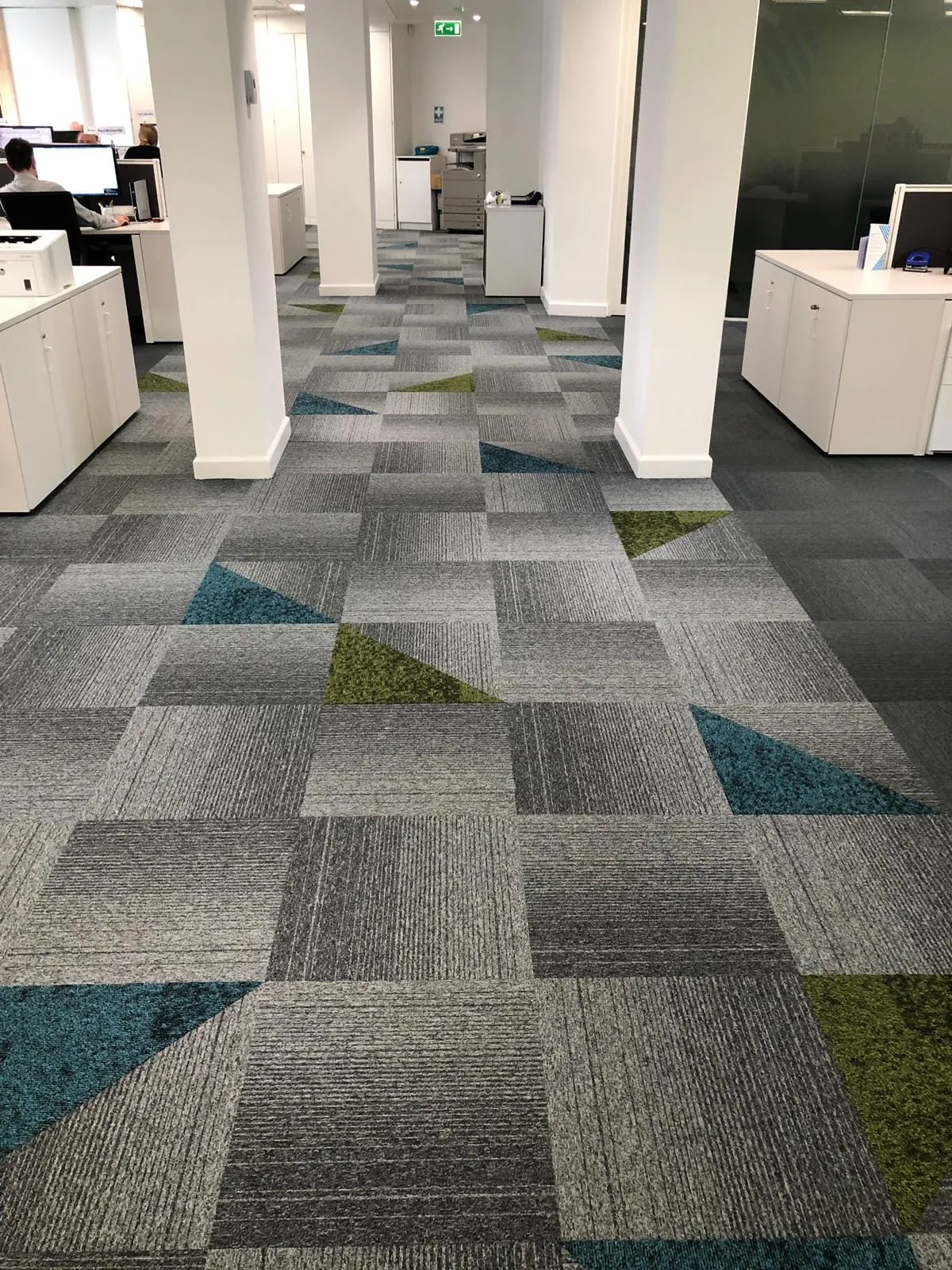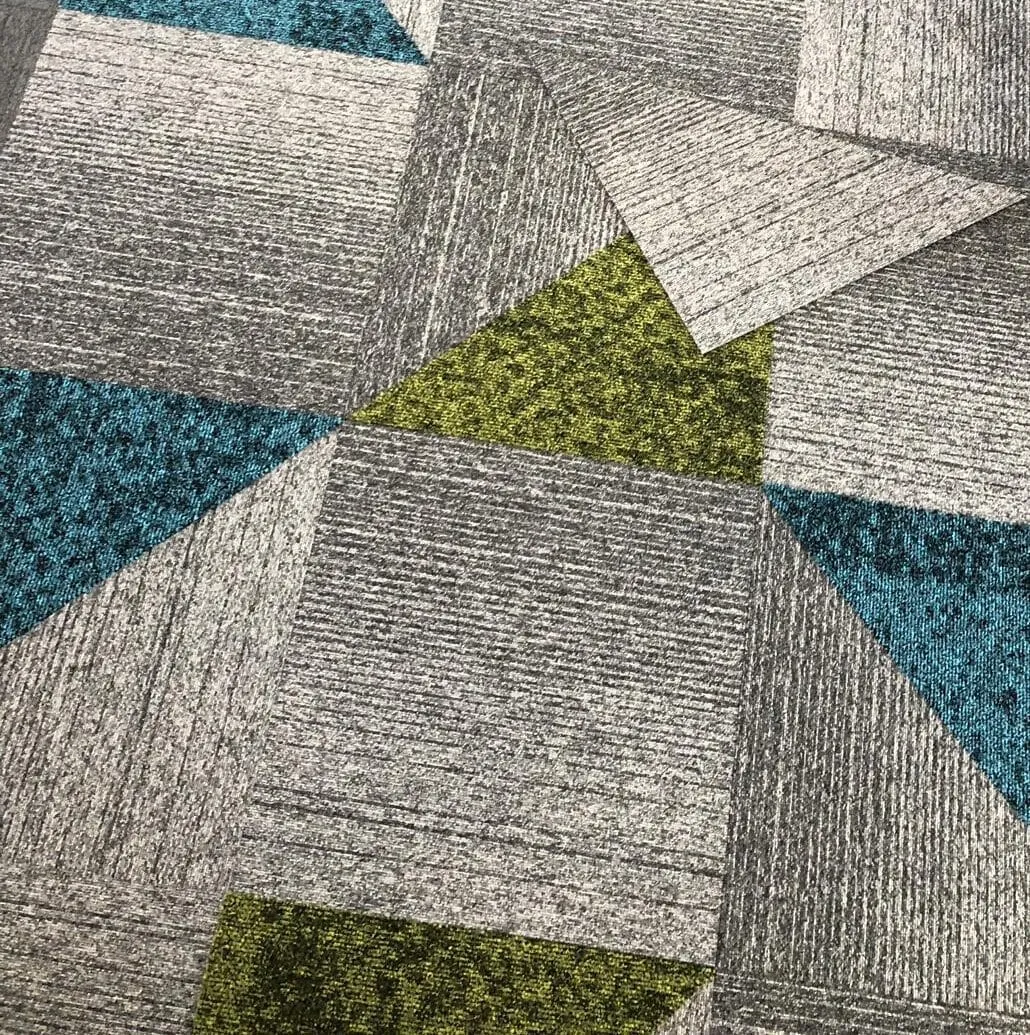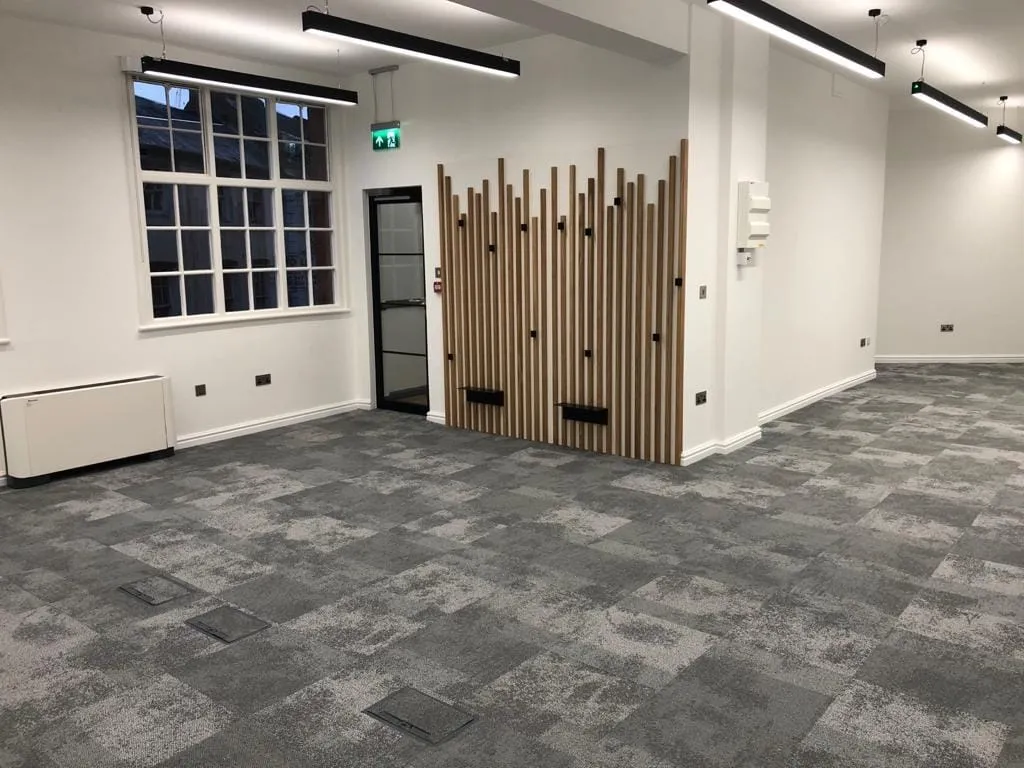
Carpet tiles Solihull are more than a convenient alternative to broadloom. Specified well, they improve acoustics, comfort and wayfinding while keeping lifetime costs under control. This page gives practical, experience based guidance so you can choose with confidence. It is written for offices, schools, healthcare waiting areas and residential blocks that see real daily use.
Each tile is its own unit. When a tile is stained or worn you lift it and drop in a spare. In large offices we typically see only five to ten percent of tiles swapped per year, which keeps spaces looking fresh without a full refit.
A typical carpet tile over a suitable backing reduces impact sound by 15 to 25 dB and absorbs airborne sound that causes echo. Thermal resistance around 0.15 to 0.20 m²K/W helps steady room temperatures on concrete slabs. The net effect is quieter rooms and slightly lower heating energy in winter.
Because tiles are modular you can rotate pattern directions or mix tones to create walkways, focus zones and collaboration areas. This avoids hard partitions and makes later reconfiguration simple.
With tackifier adhesive and a prepared subfloor, a 100 m² office often completes in a working day. No separate underlay is required, so downtime stays low and phasing is easier in live buildings.
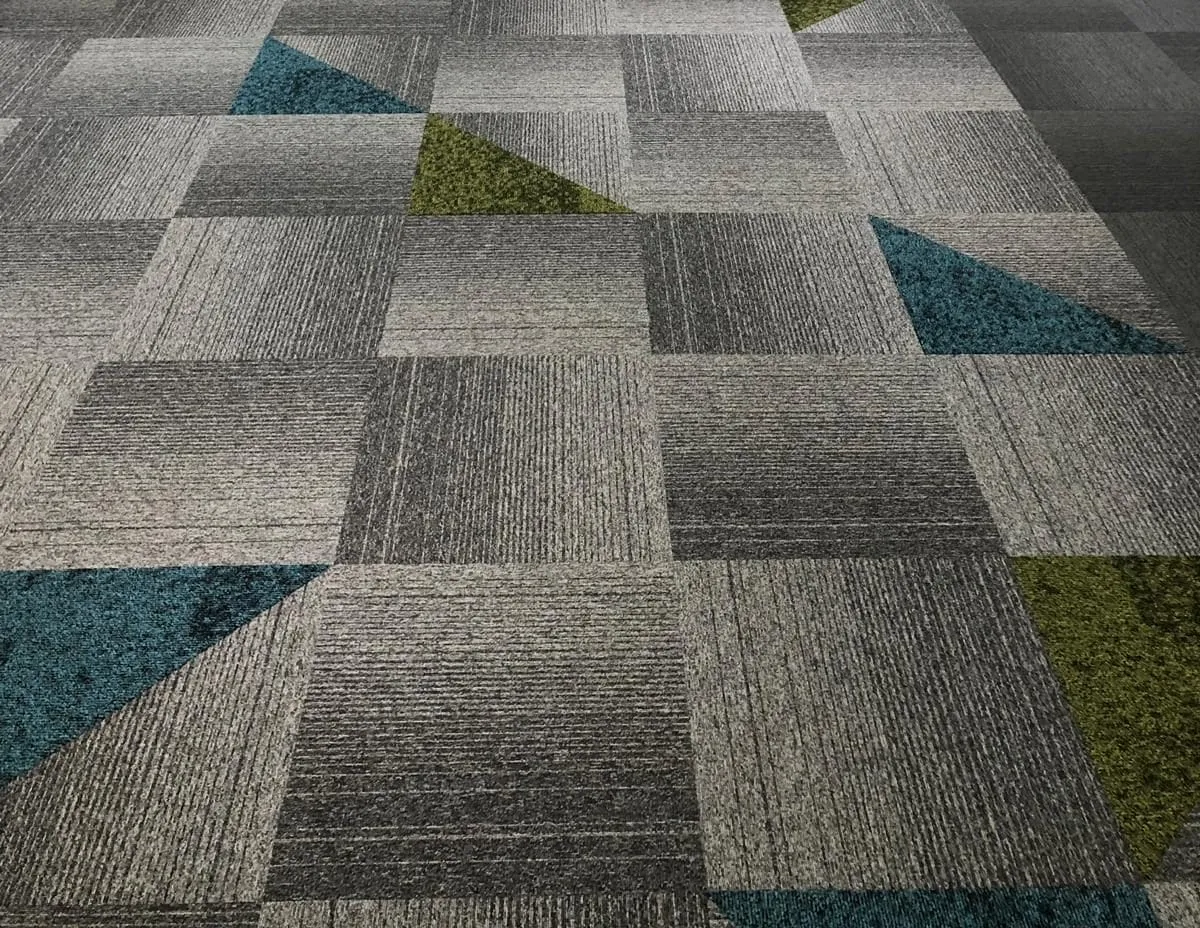
Start with these four inputs:
Translate those into choices that matter.
Solution dyed nylon is the benchmark for heavy traffic and chair castors. Colour runs through the yarn which resists fading and aggressive cleaning. Polypropylene is fine for light use or short leases. Wool blend tiles are niche and used where natural fibre is a brand priority.
Loop pile hides tracking in corridors and classrooms and is the workhorse for durability. Cut pile is softer for boardrooms and lounges. Combination piles give texture without losing wear resistance.
Bitumen or PVC backings provide dimensional stability. Cushion backed tiles add comfort and can deliver up to 25 dB impact sound reduction, useful in multi storey offices or over raised access floors.
Square 50 by 50 centimetres remains standard. Planks such as 25 by 100 centimetres allow herringbone or ashlar patterns that read more residential without losing modularity.
Check EN 13501 fire rating appropriate to the space and a commercial use class rating that matches traffic. For stairs and escape routes we also confirm nosing compatibility and contrast.
The most useful metric is cost per square metre per year. Lifecycle cost equals installed cost plus cleaning and replacement over the planned years then divided by the years.
Option one: Nylon loop tile installed at £35 per m². Annual cleaning £3 per m². Replace seven percent of tiles each year at £35 per m².
Option two: Low cost polypropylene tile installed at £25 per m². Cleaning £3 per m². Replace fifteen percent of tiles each year.
The cheaper install loses once real replacement rates are included. This is why specification beats headline price.
We test relative humidity of concrete slabs. Readings above acceptable limits need a moisture tolerant primer and smoothing compound or a liquid DPM. Skipping this is the most common cause of debonding.
High spots telegraph through tiles and cause rocking. We feather out ridges and fill lows to meet tolerances. Cushion back helps but is not a fix for poor prep.
Plan a three metre primary matting zone to trap grit and moisture. This simple detail can double the life of the field tiles beyond.
Specify chair castor rated tiles and use suitable underlay pads under heavy point loads. This keeps pile crush under control.
Many current ranges contain recycled nylon and backing. Low VOC adhesives and tiles support good indoor air quality targets. Where projects seek BREEAM or similar, we can document recycled content, VOC levels and take back schemes for end of life tiles.
Quarter turn hides soil and makes seams vanish in heathered designs.
Ashlar or brick lays planks in a direction that gently leads the eye along corridors.
Herringbone in plank formats gives movement in reception without the maintenance headache of real timber.
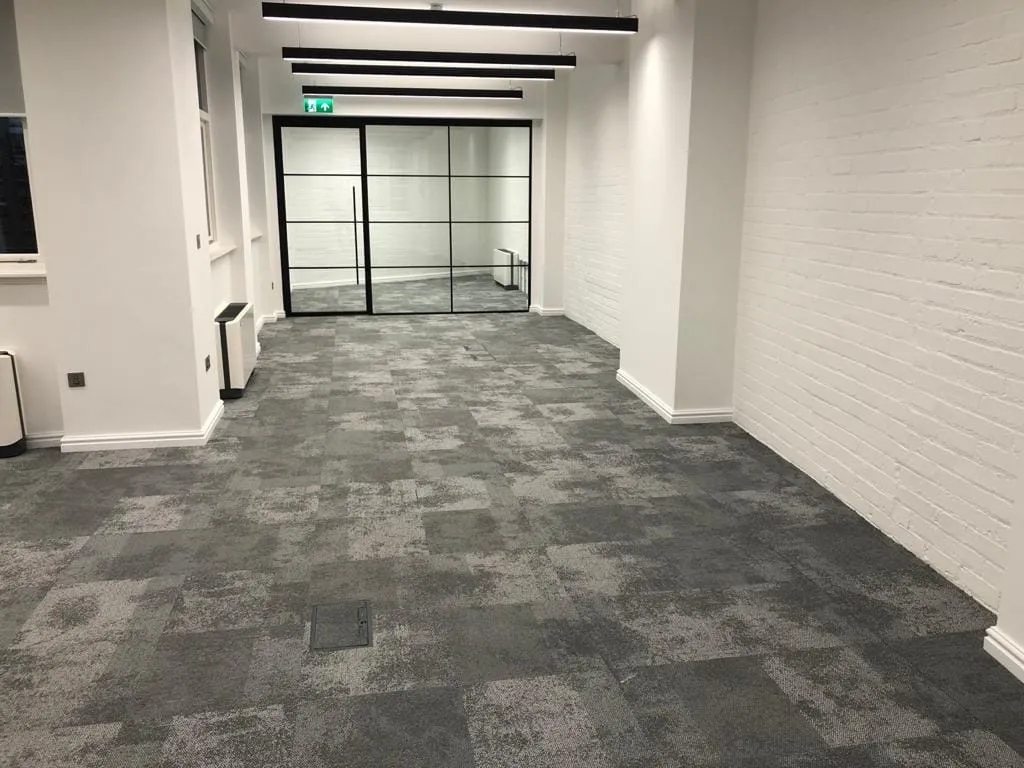
Excel in open plan offices, classrooms, libraries, meeting rooms and residential corridors where noise and comfort matter.
Avoid in consistently wet zones such as commercial kitchens or showers. Use welded vinyl, safety vinyl or resin instead and transition neatly at the threshold.
Goal was quieter movement and lower cleaning time. We used a nylon loop tile with cushion back and a mottled mid tone that hides soil. Post install, teachers reported a clear drop in echo and the caretaker now replaces single tiles near bottle filling points rather than scheduling full area cleans.
Brief was comfort underfoot and brand aligned zoning. We used plank tiles in two greys with a subtle blue accent stripe to define collaboration areas. Entrance received primary and secondary matting. After twelve months fewer than three percent of tiles needed swapping and meeting rooms hold their appearance despite chair castors.
For more examples of our work please see our Gallery here.
Heavy footfall with castors?
Noise sensitive or multi storey?
Short lease or budget?
Fast turnaround?
If you want a floor that looks right and holds up to daily use, we can help you specify it correctly. Call 07432 153015 or use the online contact form to arrange a free site visit. We measure, test, bring samples and give a clear plan with itemised costs so you can make an informed decision.