
Choosing clinical flooring for a hospital or a dental surgery is not the same as picking one for your kitchen at home. It is much more complicated than just looking at a colour chart. At Stansbie flooring we have spent decades working with healthcare providers across Birmingham and the west midlands. We know that the floor is actually a piece of medical equipment in its own right. It has to stop germs from spreading and it has to keep people from falling over. If you get it wrong then you end up with a surface that is hard to clean or a floor that trips up staff when they are in a hurry.
Here is how we look at the process. It starts with understanding the specific needs of your room because a waiting area needs something different than a theatre.
The first thing you have to think about is infection control. In a medical setting the floor cannot have any gaps or cracks where bacteria can hide. This is why we almost always recommend high quality vinyl but it is not just about the material itself. It is about how it is installed. We use a technique called coved skirting where the vinyl continues up the wall for a few inches. It creates a smooth curve that is easy to wipe down. There are no corners for dust or germs to get trapped in.
Another big factor is how the floor handles spills. Clinical flooring needs to be resistant to chemicals and bodily fluids. If a nurse drops a bottle of disinfectant or something worse the floor should not stain or degrade. We often suggest brands like altro or polyflor because they are built for this kind of use. They can handle heavy cleaning machines and strong detergents every single day without losing their finish.
Safety is just as important as hygiene. People are often moving quickly in hospitals and the floors are frequently wet from cleaning. You need a floor with a good slip rating. We look for products that provide grip even when there is surface moisture but you have to be careful not to pick something too rough. If the floor has too much texture it becomes a nightmare to keep clean because the mop strings get caught in the grit.
You also have to think about the people standing on the floor for twelve hours a day. Hard floors like tiles are brutal on the joints. A good clinical vinyl has a bit of give to it. It is much more comfortable for doctors and nurses who are on their feet all shift. It also helps with acoustics. Hospitals are loud places and a floor that absorbs some of that sound makes the environment much calmer for patients.
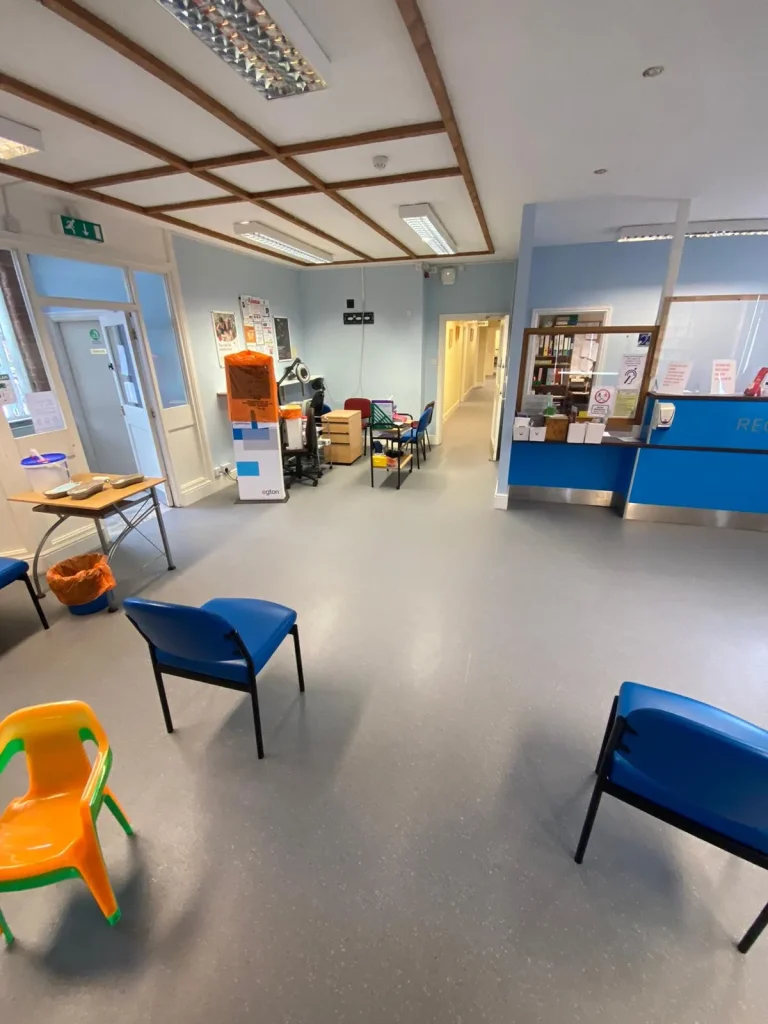
We always tell our clients that the most expensive floor in the world will fail if the subfloor is not right. Before we even think about laying the vinyl we spend a lot of time preparing the ground. We check for moisture levels and we use smoothing compounds to get a perfectly flat surface. In a clinical environment any bump in the floor can cause a trolley to rattle or someone to trip.
Welding is the other critical part. When we join two sheets of vinyl we use a heat weld. We melt a matching vinyl rod into the joint so the entire floor becomes one seamless piece. If this is done poorly the weld can crack over time and let water underneath. At Stansbie flooring we take a lot of pride in our welding because we know that a single gap can compromise the hygiene of the whole room. We have been doing this for over forty years so we know how to get it right.
It is easy to forget about maintenance when you are looking at new samples but it is a huge part of the cost. Some floors look great on day one but they require constant waxing or polishing to stay hygienic. We prefer to install ‘no-polish’ floors. These have a special coating that keeps them looking good with just a standard cleaning routine. It saves the healthcare facility a lot of money and downtime in the long run.
Durability is also non-negotiable. Medical equipment is heavy. Beds and x-ray machines have small wheels that put a lot of pressure on a tiny area of the floor. If the vinyl is too soft it will indent or tear. We make sure the products we specify are rated for heavy commercial use. This means the floor will stay functional for ten or fifteen years rather than needing a replacement after three.
We know it can feel a bit overwhelming with all the technical specs and r-ratings but it really comes down to the specific use of the space. For a pharmacy or a GP surgery you might want something that looks a bit more welcoming but still meets all the health and hygiene standards. You can get wood-effect or stone-effect vinyl’s that are fully clinical grade. It helps take away that cold institutional feel of a clinical space.
If you are planning a renovation or a new build in the west midlands we can help you navigate these choices. We have worked in all sorts of environments from small dental clinics to large hospital wards. We don’t just sell you clinical flooring; we help you figure out which one is going to last and keep your patients safe.
You can see some of our previous work and the types of materials we use in our project gallery. We are happy to come out and take a look at your site to give you some honest advice. We don’t use pushy sales tactics because we know our reputation in Birmingham speaks for itself. If you need a floor that meets every regulation and actually lasts then we are the people to talk to. Call us today on 0121 356 5858 or fill in our online contact form.