Most people fitting out an office think about desks, chairs, lighting. Maybe a decent coffee machine. The floor tends to come last, if it gets thought about properly at all. But here’s the thing, everyone in that building walks on it every single day and if you get it wrong it costs you. Not just money, time and hassle too, often at the worst possible moment.
At Stansbie Flooring we’ve been helping businesses across Birmingham and the West Midlands sort their office floors for over 40 years now. The same questions come up every time. What holds up? What looks good without being a nightmare to maintain? Is carpet even worth considering anymore? So this is just an honest look at what we’ve found works, and what doesn’t.
They pick one floor type for the whole office. Walk around any commercial space and you’ll notice the areas are all pretty different. A reception area takes a lot of punishment and needs to make an impression. An open plan workspace is about comfort and acoustics as much as looks. A kitchen or breakout area needs something that handles spills and is easy to clean. Treating it all as one decision usually means compromising everywhere.
It’s also worth being realistic about wear. Office floors get hit hard. Chair castors alone do a lot of damage over time, and that’s before you factor in foot traffic, trolleys, anything being dragged across the surface. Something that looks great in a showroom can look pretty rough after 18 months if it’s not the right product for the space.
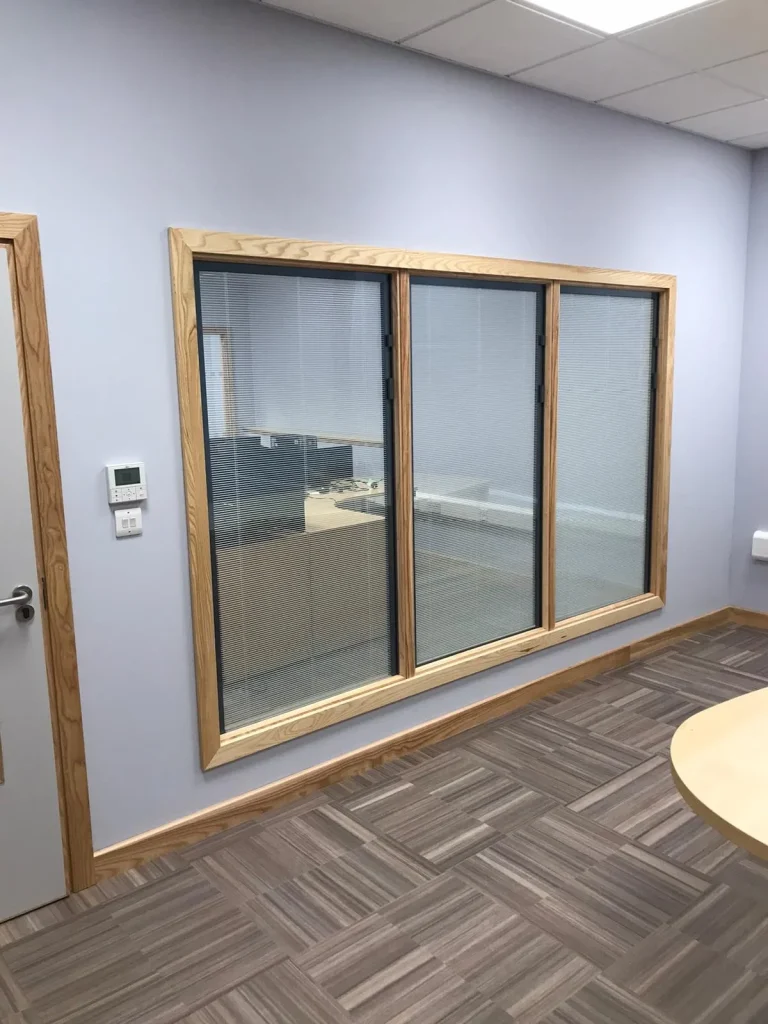
There’s a bit of a view that carpet in an office is dated. It really isn’t. Carpet tiles are still one of the most practical options for open plan workspaces, mainly because of what they do to acoustics.
If you’ve ever worked in a large office with a hard floor you’ll know the noise issue. It just bounces around. Carpet tiles absorb a lot of that and it genuinely makes a difference to how the space feels to work in day to day. They’re also far more forgiving than broadloom carpet when something goes wrong. You replace the affected tiles, not the whole floor. For offices where cables get moved around, or where you’re doing small refurbs over time, that flexibility is actually really useful.
The range has come on a lot too. You can zone areas with different colours, add some pattern, or keep it clean and neutral. Whatever suits the brand.
LVT flooring gets specified a lot in commercial projects now and for good reason. It looks good, it’s tough and it’s easy to maintain. You can get it in wood and stone effects that are genuinely convincing, without the upkeep or the cost that comes with the real thing.
For reception areas, corridors, anywhere that needs to look smart and handle heavy use, LVT is usually the right call. It’s water resistant and doesn’t need anything specialist to keep it looking decent, just regular cleaning.
One thing worth knowing though, and this matters more than people realise, not all LVT is the same product. Domestic LVT and commercial LVT look almost identical but they’re not. The wear layer thickness is what makes the difference and in a busy office environment you need the commercial spec. It’s worth talking to someone who actually knows the difference before you commit to anything.
For clients who want a more premium finish, Karndean flooring is a brand we use regularly. The quality is consistent, it holds its appearance well over time and the range is genuinely wide. It costs more than entry level LVT, there’s no point pretending otherwise, but it lasts longer and tends to look better for longer too. For client-facing spaces where the environment matters, it’s often worth the extra.
Safety flooring is one of those things that doesn’t come up until it becomes a problem. But in certain areas it’s not optional. Kitchens, bathrooms, anywhere near an entrance where rain gets tracked in, you need the right slip resistance rating and it’s something we always discuss with commercial clients upfront. Getting transitions between floor types right matters too, especially where you’re going from hard to soft surfaces. Small detail but it makes a real difference to how the finished job looks.
A few practical questions are worth answering before you get into products and prices. How many people are use the office floors daily? Are there wet areas? Does noise matter, is it a quiet focus environment or a busy collaborative one? What’s a realistic maintenance commitment? And how long do you need the floor to last before you’d consider replacing it?
Those answers shape the decision more than personal preference does. It’s less about what looks nice and more about what the space actually needs.
At Stansbie we work with all the main manufacturers including Polyflor, Moduleo, Amtico, Gerflor and Forbo, so we’re not trying to push you towards one product. We look at the space, understand how it’s used and work from there. Our commercial flooring work across Birmingham covers everything from small professional offices to large multi-floor fit outs, and the approach is the same each time. Figure out what actually works, then fit it properly.
Because a good floor fitted badly is still a bad floor. That bit matters as much as the product itself.
If you want to talk through what might work for your space, just get in touch with our team today and we can help you find the best solution for your space.